Insight
From Campaign Click to Customer
Marketing becomes more accountable when the customer journey continues beyond the click.
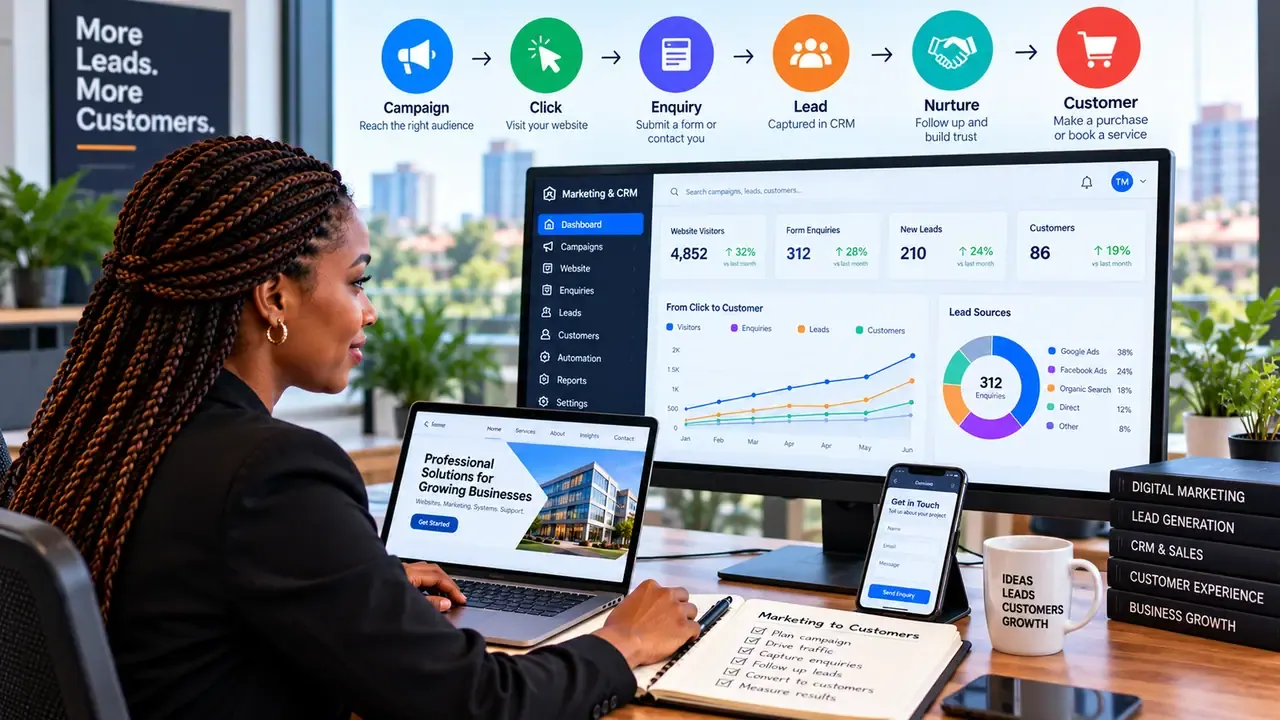
Marketing becomes more accountable when the customer journey continues beyond the click.
The click is only the hand-off
A digital campaign can attract attention and generate website visits, but a click is not the same as a customer. The commercial result depends on what happens next: whether the landing page answers the visitor's question, whether the enquiry is captured correctly, how quickly the team responds and whether the conversation progresses into a qualified opportunity.
If an advert sends people to a generic page, a form asks for too much information, or enquiries sit in an unattended inbox, campaign spend can produce activity without producing enough business value. The post-click journey deserves the same planning as the advert itself.
Build a clear path from interest to enquiry
Start with one campaign objective and one intended next action. A service campaign might invite a prospect to request a consultation. A product campaign might encourage a demonstration. A retail campaign might direct the visitor to a product or checkout. The landing page should make that next step obvious and provide enough relevant information for the visitor to act with confidence.
Keep forms proportionate to the decision being made. Capture the information the team genuinely needs, explain what will happen after submission and provide a clear confirmation. Where WhatsApp is an appropriate contact channel, make it easy for customers to start a conversation without losing the campaign context.
Make sure enquiries reach the right people
Define how each lead is recorded, assigned and followed up. A practical workflow can capture the source campaign, the service or product of interest, the date of the enquiry and the person responsible for the next action. Acknowledgements and reminders can help, but automation should support a defined process rather than simply create more notifications.
For teams handling many prospects, a CRM system can provide a shared view of contacts, pipeline stages and follow-up tasks. If customers prefer messaging, consider the available WhatsApp integration options as part of the wider response journey. The exact workflow should be confirmed against the systems and permissions in use.
Measure the stages that matter to the business
Do not stop at impressions, clicks or form submissions. Where tracking and operational systems allow, measure how many enquiries are valid, how many become qualified opportunities, how many receive a proposal or appointment, and how many result in a sale. This helps distinguish a campaign that attracts inexpensive traffic from one that attracts the right prospects.
Use consistent definitions. Agree what counts as a qualified lead, when an opportunity is considered won, and how repeat or duplicate enquiries are handled. Review results by campaign, audience, landing page and response time. Avoid attributing every sale to the last click if customers have interacted with several channels.
A practical campaign checklist
- Choose a measurable business objective before selecting the advertising channel.
- Match the advert's promise to the landing page content.
- Test forms, contact details and mobile usability before launch.
- Assign an owner and response expectation for every enquiry.
- Record campaign source and the outcome of follow-up.
- Review lead quality and sales progression before increasing spend.
Example: why a cheaper click can produce a more expensive customer
A Harare company runs two campaigns. One reaches many people who like a visual advert but have no immediate need; the other receives fewer clicks from people actively comparing its service. The first may report a lower cost per click, yet produce more unqualified enquiries. To decide what worked, record the source of each enquiry, whether the prospect met basic criteria, whether the team replied in time and whether a sale or appointment resulted.
Use the same definitions across channels. If an enquiry is considered qualified only when the prospect has a clear requirement and can be served, apply that rule consistently. Do not label every message or call as a new customer.
Fix the hand-off before increasing the budget
Test the whole route using a real phone: advert, landing page, call-to-action, form or WhatsApp link, staff notification and follow-up. Make the page answer the obvious questions about services, locations actually served, process and next step. Assign a person to monitor requests and record whether responses are completed. Compare cost per qualified enquiry and eventual customer, not only impressions or clicks. Review the results after enough enquiries exist to identify patterns, and adjust one major variable at a time.
Connect marketing activity to real outcomes
FMG Business Solutions works across digital marketing, websites and business systems. Explore our digital marketing services and CRM workflows, or talk to FMG about improving your customer journey. A good campaign should do more than generate clicks: it should make the next step easier for the customer and clearer for your team.
Test the full enquiry journey
Follow a campaign click through the landing page, form, staff notification and first response. Confirm where failed submissions or duplicate enquiries are recorded.
Improve lead quality rather than vanity metrics
Define a qualified enquiry and review actual sales follow-up. If clicks increase without useful enquiries, inspect page clarity, targeting and response processes before increasing spend.
Implementation checks
- Define the business outcome and accountable owner.
- Test a realistic exception before launch.
- Confirm data access, permissions and change approval.
- Record support, training and ongoing costs.
Key takeaways
- Design the post-click experience before launching media.
- Automate routing and acknowledgement where appropriate.
- Measure customer progression, not only campaign clicks.
Published 20 September 2026