Insight
Connecting Property Marketing to Operations
Property marketing is stronger when listings, enquiries and operational records are designed as one journey.
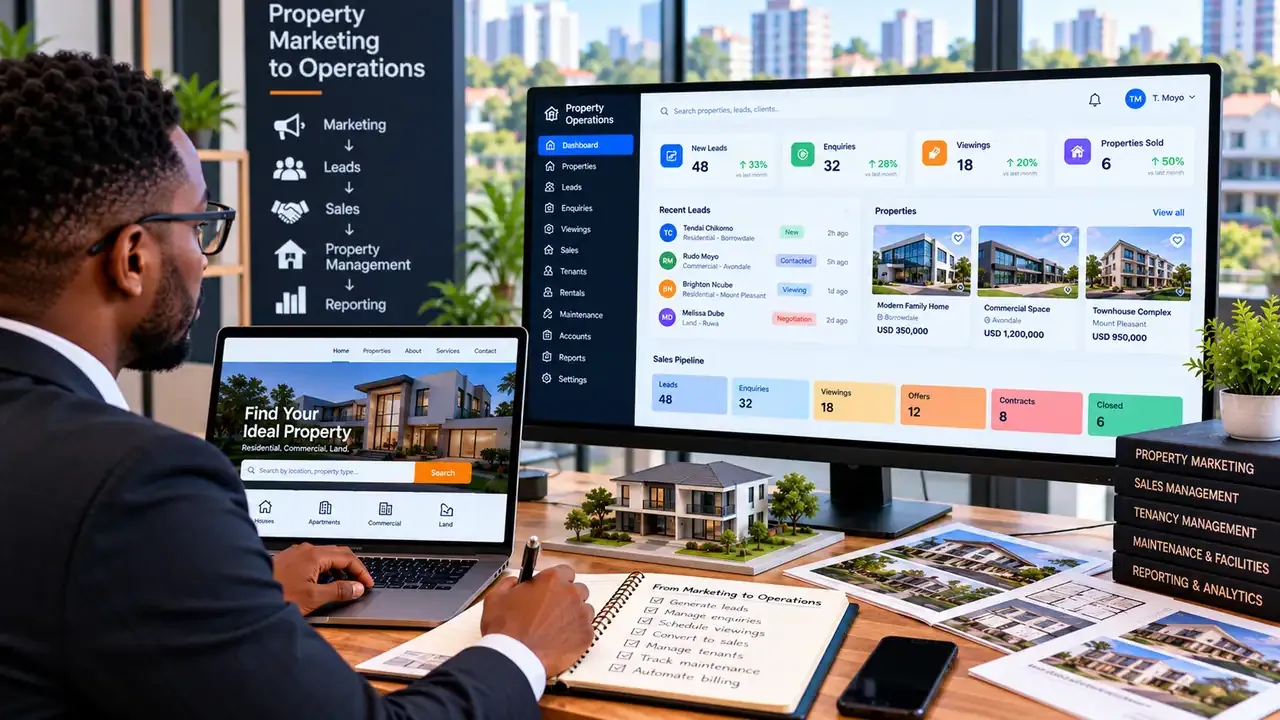
Property marketing is stronger when listings, enquiries and operational records are designed as one journey.
Stop treating the website as a separate property database
Property marketing often begins with a listing, but the customer's journey does not end when someone views a photograph or clicks an advert. The enquiry must reach the right person, relate to the correct property or unit, and remain connected to the sales or rental process. When marketing information and operational records are maintained separately, teams can spend valuable time checking availability, correcting details and working out which enquiry belongs to which property.
Keep listing information connected to its source
Start by deciding which system is authoritative for each important fact: property identity, unit availability, asking price, reservation status and rental details. The website should present approved information from that source wherever the architecture allows. This reduces the risk of a listing remaining online after its status has changed. It also gives staff a clearer process for correcting information.
Not every website needs a complex integration on day one. A smaller agency may begin with a controlled publishing process and clear ownership. A developer managing many units may benefit from a connected workflow that keeps website listings aligned with the authorised property records. The right approach depends on portfolio size, update frequency and the systems already in use.
Carry property identity into every enquiry
A useful enquiry should identify more than the person who submitted it. It should preserve the property, development or unit that prompted the contact, the page or campaign that generated it, and the date it arrived. That context helps a sales or lettings team respond accurately rather than asking the customer to repeat information.
From there, define what happens next. Who receives the enquiry? How quickly should it be acknowledged? When does it become a qualified lead, a viewing, a reservation or a tenancy discussion? These stages make follow-up measurable and help managers identify where potential customers are being lost.
Connect marketing to sales and rental operations
For property sales, the workflow may include stock availability, buyer details, reservations, agreements and instalment tracking. For rentals, it may include units, tenants, leases, rent charges, payments and maintenance. Those are related business activities, but they are not identical processes. Choose the workflow that matches the organisation instead of forcing every property enquiry into one generic pipeline.
FMG provides dedicated solution pathways for property sales and rental property management. Where lead ownership and follow-up need attention, explore CRM and marketing workflows as well.
What to review before connecting systems
- Identify the authoritative source for property and unit status.
- Agree which listing details may be published publicly.
- Preserve a stable property or unit reference in every enquiry.
- Define who owns lead assignment, response and follow-up.
- Test changes, cancellations and unavailable properties before launch.
- Decide how errors, delayed updates and duplicate enquiries are handled.
Worked example: a property enquiry from website to reservation
A prospective tenant sees a Harare rental listing and asks whether the unit is available. The website should pass the property's stable reference, location and relevant enquiry details to the authorised rental team. A staff member checks the live availability and records the next action. If the unit is already under application, the system should prevent an outdated web advert from silently generating conflicting commitments. The customer receives a clear response rather than a generic message with no property context.
For property sales, the journey might continue from a listing enquiry to a viewing, reservation approval, agreement and deposit. Each stage needs its own rules and permissions. Marketing should not independently mark a unit as sold, and an agent's spreadsheet should not override the authorised inventory record without reconciliation.
What to verify in a property integration pilot
Test a newly published listing, a changed price, a property taken off the market and two people enquiring about the same unit. Confirm how quickly approved changes appear on the website, who handles an integration outage and whether enquiries are assigned with enough context to respond. Review how client information is stored and shared. Measure time to follow-up, duplicated listings and enquiry-to-viewing conversion rather than simply the total number of listing views.
Frequently asked question: must the website show live availability?
That depends on the reliability of the underlying property records and how often availability changes. If the team cannot keep the source system current, a public claim of instant availability may mislead buyers or tenants. Start with accurate listing statuses and clear enquiry handling, then add deeper integration once staff can maintain and reconcile the information consistently.
Make the customer journey easier to manage
A connected property experience helps customers find relevant information and gives staff a clearer path from enquiry to action. The objective is not technology for its own sake; it is fewer disconnected records, more useful context and a more dependable process for the team.
FMG Business Solutions can help you assess the website, marketing and operational requirements together. Discuss your property workflow with FMG and outline the platforms you currently use, the size of your portfolio and the improvements you want to make.
Key takeaways
- Publish from authoritative property data where possible.
- Preserve property identity through enquiries.
- Connect marketing to real sales and rental processes.
Published 12 September 2026